my favorite games of 2025
15 Dec 2025
Every year, I keep a list of the games I played and try to rank them. It’s a nice way to revisit some of the games I connected with most, and hopefully put my friends onto stuff they haven’t heard of. This year was a particularly good one—I didn’t play quite as many new titles as usual, but each one on this list is a treat. (I will say upfront that I didn’t get to Clair Obscur, this year’s breakthrough game, but it’s gotten more than enough recognition anyway.) Enjoy!
tap each number to reveal the entry
10. ⤵︎
10. WHISKEY.ST2007S
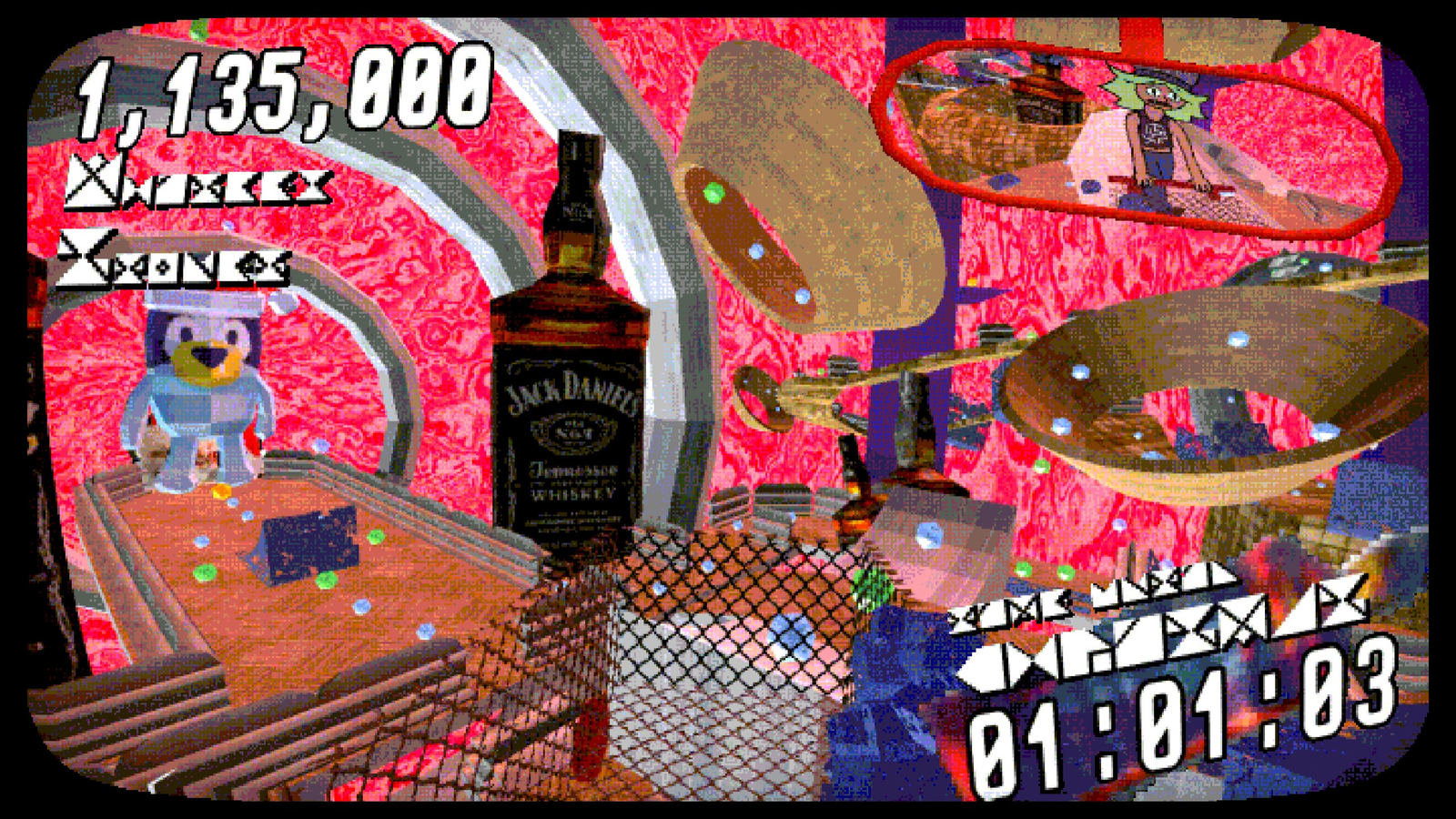
I chanced upon this small but superb game at boshi’s place in February and it’s a banger. You push a shopping cart into the Whiskey Stone Dimension, momentum-surfing around corners to collect all the whiskey stones you can before time runs out. Really cool, trippy, weird game set to an electrifying hyperpop soundtrack. (It’s pay-what-you-can on itch.io!)
9. ⤵︎
9. Shovel Knight
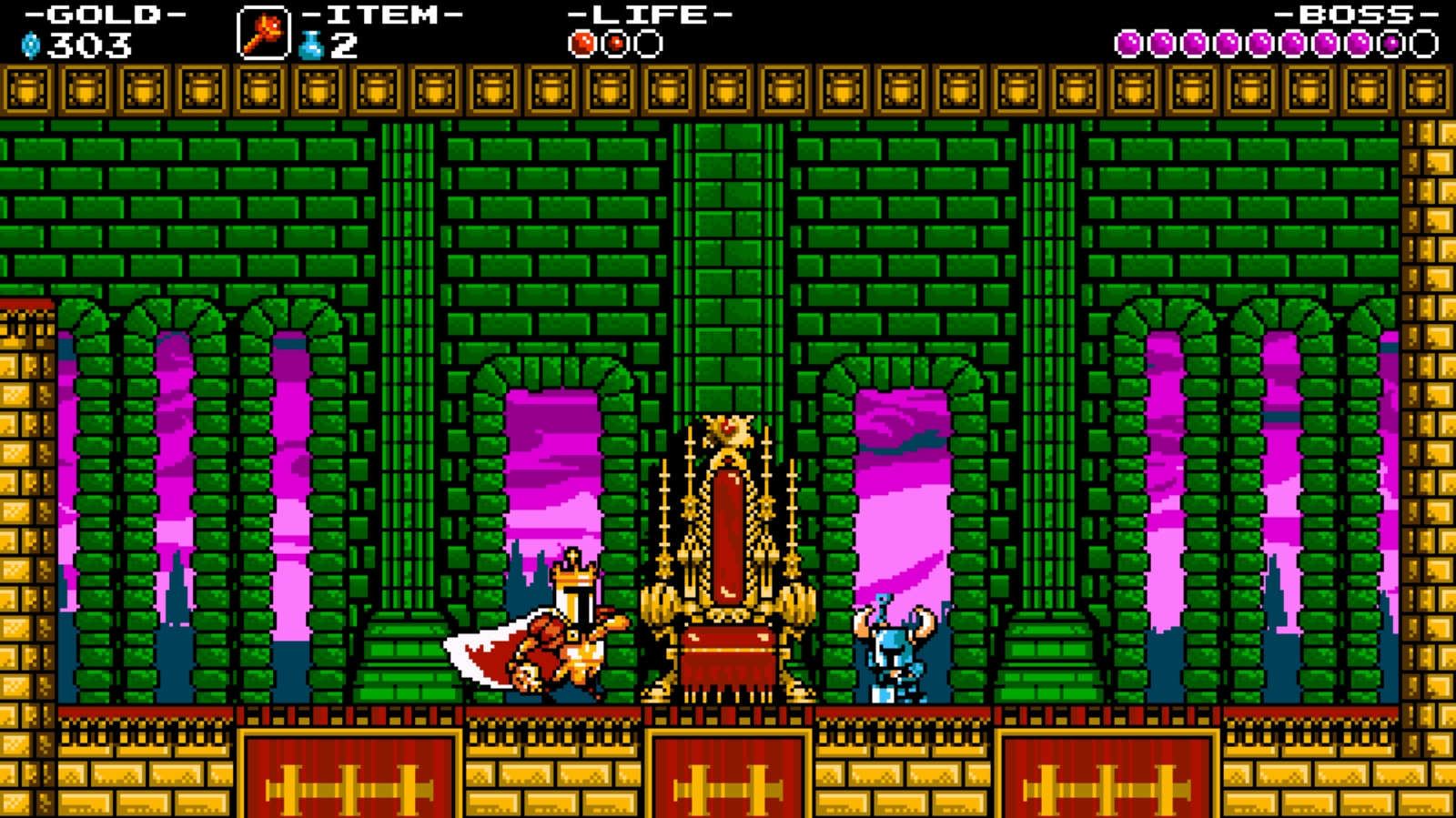
I never really played the NES classics that Shovel Knight pays homage to, but I still got a lot out of it. Its eccentricity and just-right level of challenge make this game a hoot. (Although some people call it the greatest indie game of all time, and I think that take might be a little nostalgia-tinted.)
8. ⤵︎
8. Paper Trail
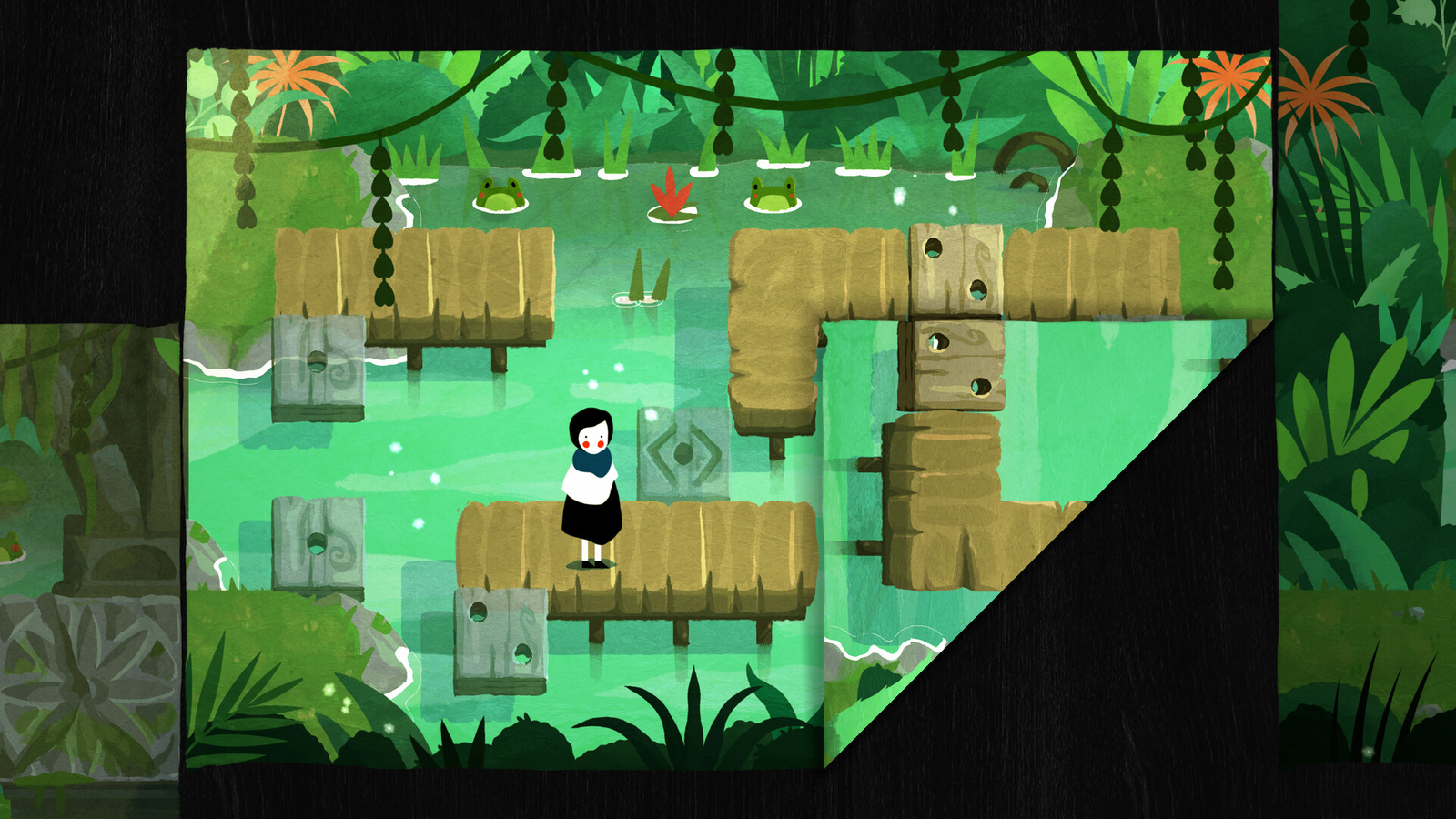
A beautiful puzzle game with a clever mechanic at its core: you can fold the entire screen in different ways to traverse gaps, reveal exits, and reach secret areas.
7. ⤵︎
7. Nubby’s Number Factory
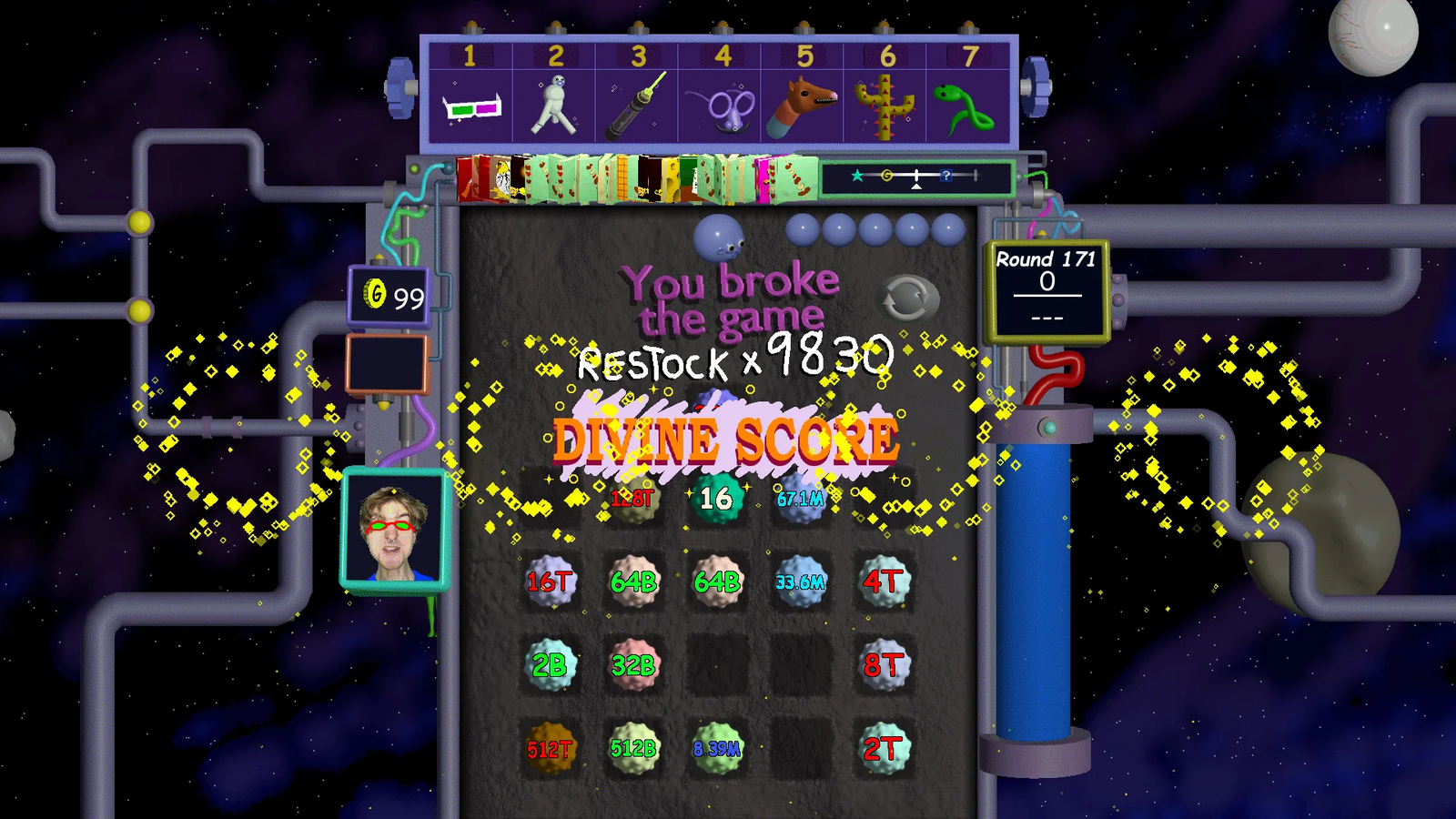
This game is what I imagine it’s like to play plinko while on a heroic dose of acid. A delightfully weird and chaotic roguelike that cares less about being balanced than it does about being fun.
6. ⤵︎
6. Keep Driving
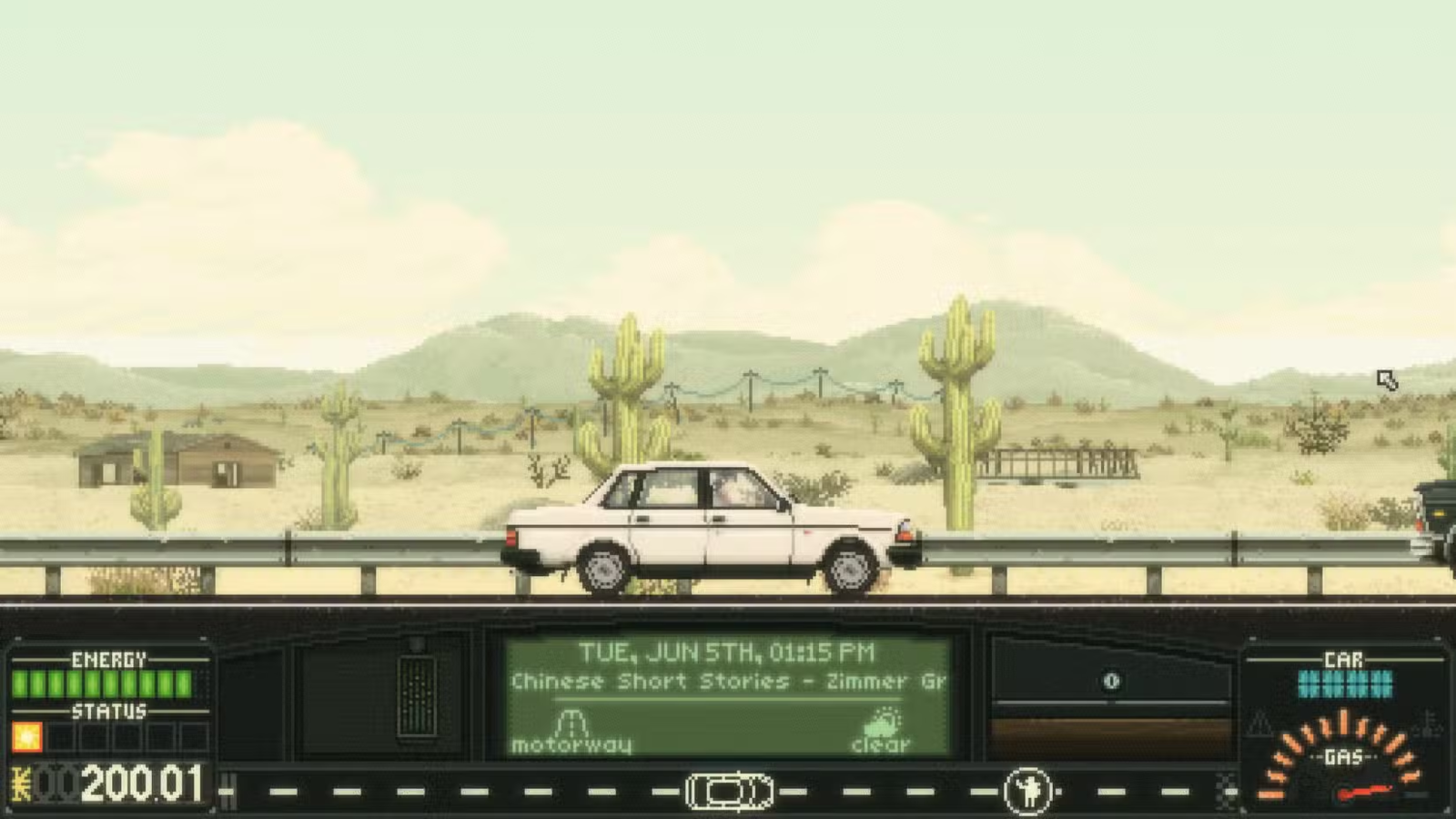
I don’t even know how to drive, but Keep Driving somehow managed to make me miss being behind the wheel. It’s a road-trip-themed RPG where you cruise from town to town, pick up odd hitchhikers, and deal with various road trip mishaps along the way. You might help a runaway bride find herself after leaving her husband at the altar, or go on a quest to claim an inheritance from your grandma, or deck your car out in just the right parts and paint so it can cameo in an indie movie shoot.
Keep Driving is a masterclass in vibe curation. The art, UI, and sound design transport you right to the front seat of a crappy 90s sedan, window rolled down, highway smells wafting through, early-trip optimism emanating from you and your crew, and some good old driving music blasting from a CD player. And holy crap, the music selection here is immaculate. It’s a blend of slacker rock, indie pop, and post-punk that perfectly captures the feeling of being young and aimlessly in motion. Do yourself a favor and save the Spotify playlist for the next time you’re actually on a road trip.
This game is a bundle of joy. It sets out to capture a very specific feeling—one I didn’t know how much I would appreciate. I still have some alternate endings and side quests to explore, so I can’t wait to pick it up again.
5. ⤵︎
5. Kaizen: A Factory Story
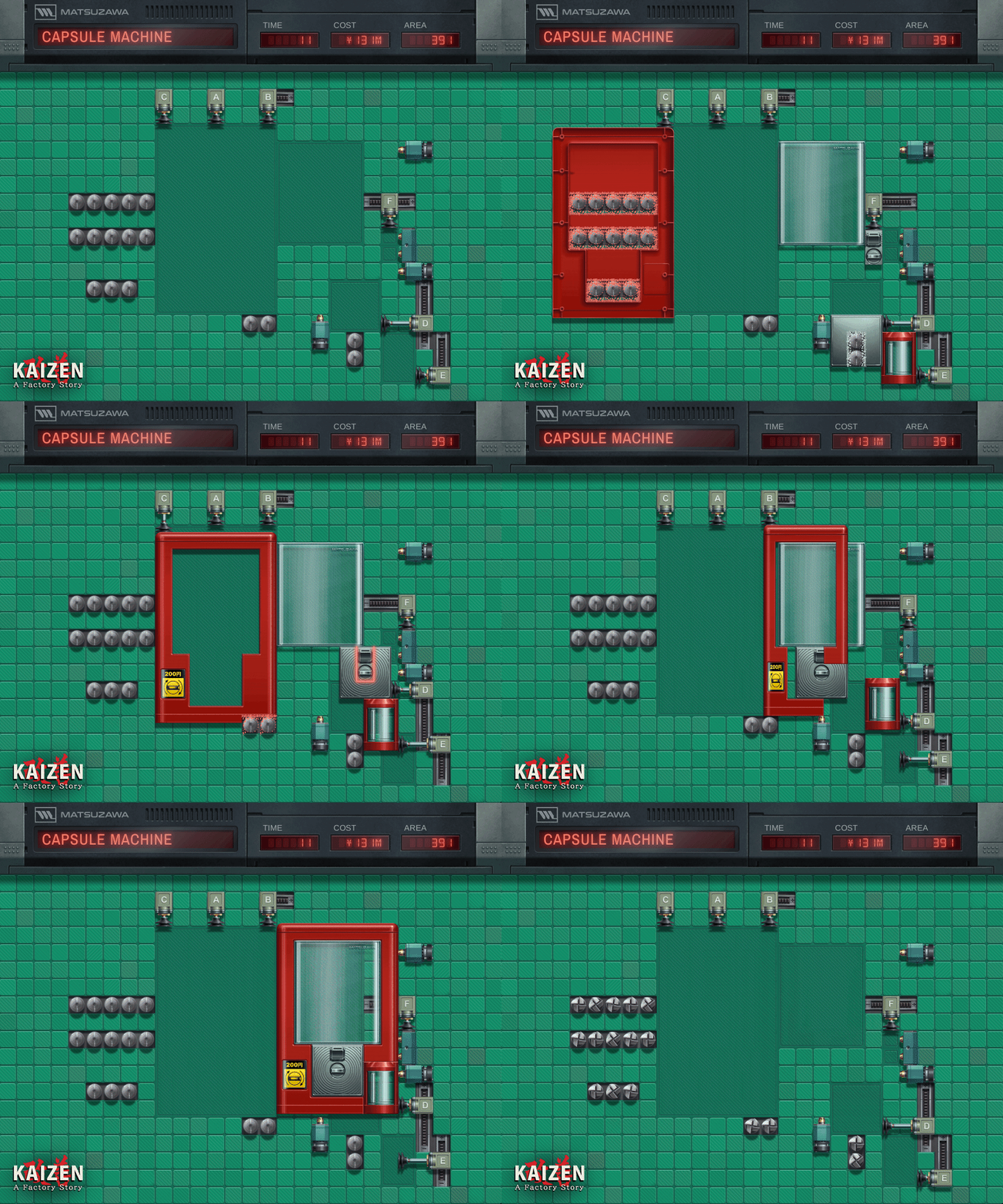
Video games are powerful vehicles for fantasy. They let you live out your wildest dreams: questing through monster-riddled lands, acquiring mythical powers of teleportation, optimizing assembly lines for Japanese factories in the 80s… wait, what?
Kaizen: A Factory Story comes from a storied lineage of nerd games. It’s developed by Zachtronics, who made a name for themselves developing engineering and programming-centered puzzle games. One of their games, Shenzhen I/O, was literally about writing low-level assembly code and reading a 50-page manual (and was one of my favorite games of 2022). Don’t worry, though—Kaizen is a touch more accessible than that. You play the role of an American relocating to a Japanese company in the 80s. Expecting to work in international sales, you quickly realize that you’ll instead be designing assembly lines for all sorts of products, from socks to arcade machines. You’ll wield robotic arms of various types, programming them to push or flip or otherwise manipulate parts, as well as welders, drills, rails, and other widgets.
Successfully assembling an item to spec can be a deeply gratifying challenge on its own. The competitively inclined, however, can see how they do on the global leaderboards (helpfully visualized as histograms) and try to optimize for various goals: making your assembly line faster, cheaper, or smaller. Few things felt better than realizing my wacky solution was among the most space-efficient in the world.
On top of its puzzling, Kaizen’s earnest story and likable characters deserve a shout. Your character’s journey to becoming a confident engineer is told in vignettes between puzzles, providing welcome breaks from the brain-frying optimization that makes the game tick. A lot of the dialogue in Kaizen is about getting creative with product design, although you never really get to change what the products being made are. The real creative outputs of the game are the GIFs of the assembly lines themselves: watching your widgets hum and whir and slide into place like a Rube Goldberg machine. It’s probably not for everyone, but if you’re into challenging puzzles and optimization, Kaizen is a really enjoyable experience. It’s polished, charming, and satisfying as hell.
4. ⤵︎
4. Mosa Lina
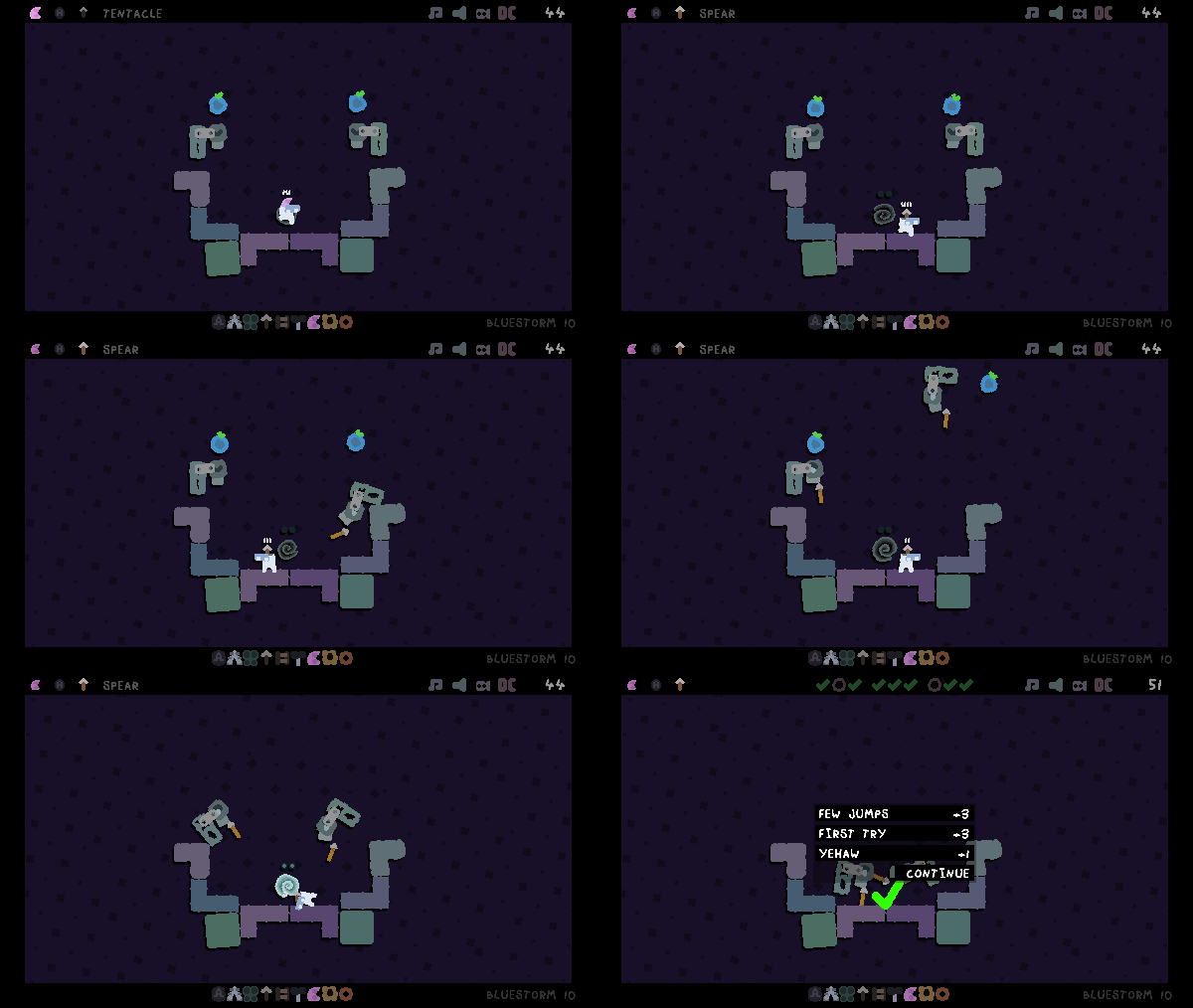
Mosa Lina describes itself as “hostile” and “aggressively random”—not the most enticing first pitch. The game was born out of a very specific gripe with modern game design. Too often, puzzle video games are just disguised “lock-and-key” systems: find the special item, use it in the special place, and move on. Mosa Lina torches that philosophy. Each run drops you into a randomly chosen level with a random set of tools, leaving you to improvise your way out. Sometimes that means you clear a stage in two seconds flat. Other times, the tools you’re given make it literally unwinnable. Both extremes are somehow valid, interesting parts of the Mosa Lina experience.
The majority of this game’s fun comes from its unique, varied, and sometimes game-breaking items. Here, a spear isn’t just a spear: you can cut a rope to swing yourself across a gap, or jam it into the wall as a springboard to jump off, or even lodge it into an enemy turret so that it repeatedly blows itself up, Looney Tunes style. Yet, the spear is one of the tamer tools in the game—others include “starfish”, “gun gun”, “mobilize”, and “upgrav”. Those items’ powers are often more magical than physical, but once you understand how they work, they afford even more creative problem-solving.
The result of all this controlled chaos is a physics puzzler/platformer that feels infinite. You’ll constantly stumble into moments that make you feel like a genius, either through clever use of a tool, pulling off an extremely tight platforming sequence, or accidentally breaking the level in a crazy way. When I first saw footage of this game I thought that it would be an interesting, 2-hour curiosity until I got tired of it. 25 hours in and I’m still finding new ways to use tools I’ve seen hundreds of times.
3. ⤵︎
3. Nine Sols
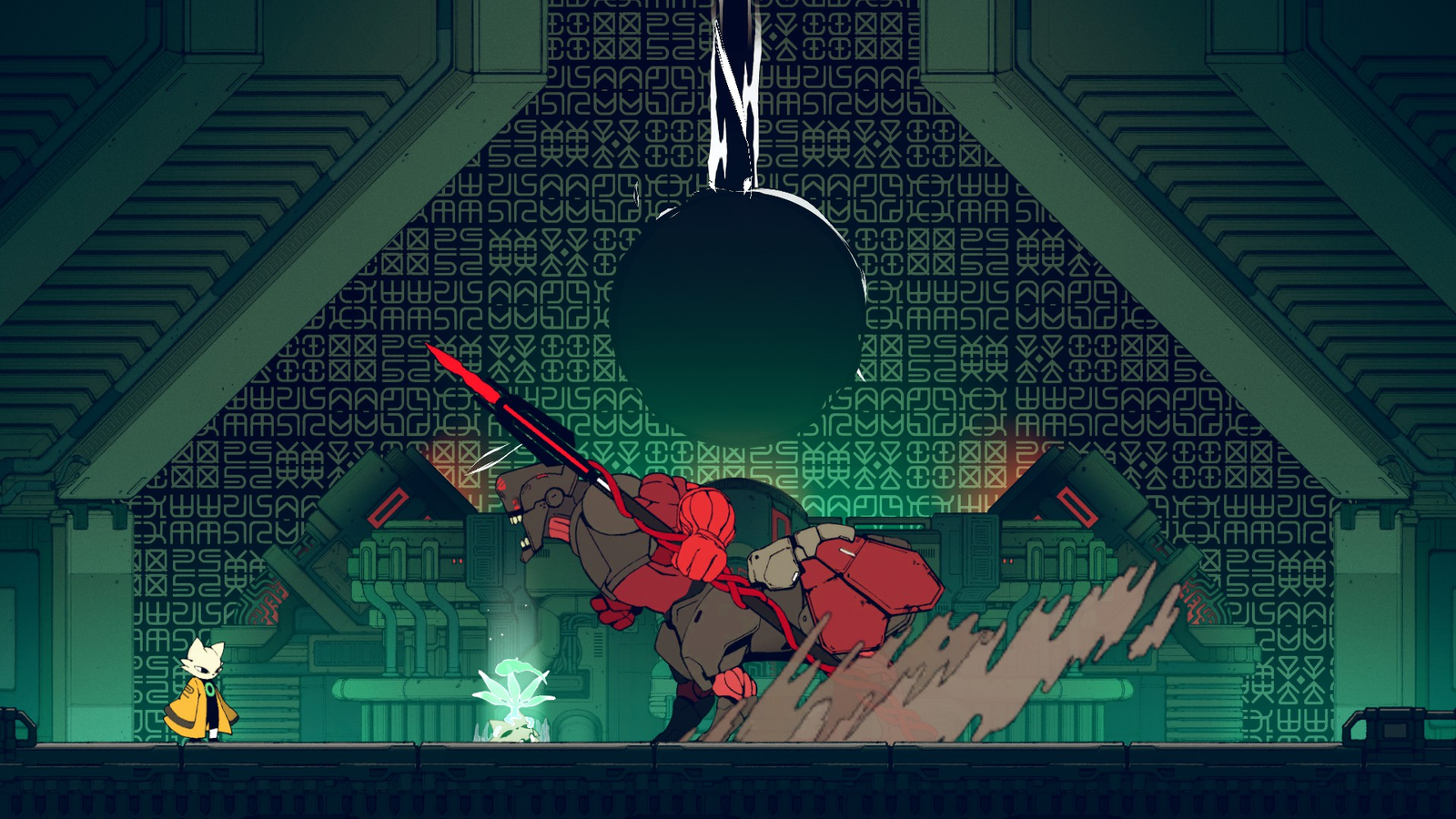
There is always an impulse, when telling someone about a new game, to describe it in terms of ones you already know and love. It’s Dark Souls but underwater! It’s Pokemon but with cassette tapes! It’s… like Balatro! Doing so is, of course, somewhat natural and even helpful as shorthand that quickly paints a picture of what a game’s like. Sometimes, though, these labels can miss the mark on what makes a game special.
Take Nine Sols, for example, which was recommended to me multiple times as a cross between Hollow Knight and Sekiro. That premise hooked me—bringing Sekiro’s almost rhythm game-esque parry philosophy to a 2D Metroidvania is a match made in heaven. I genuinely struggle to think of a game with more satisfying combat. Once you learn a boss, fighting it feels like a carefully choreographed dance. The game is no cakewalk, but despite its difficulty, it succeeds at making you feel cool—whether through perfectly parrying a tough sequence of attacks, blasting a crowd of infected zombies with a piercing arrow, or dashing through an enemy, tagging them with a talisman, and seeing them explode a second later.
But in spite of the stellar combat, what really stuck with me—and sustains Nine Sols’ relatively active online community—is the world it builds and the characters that inhabit it. The lore and art are a fascinating blend of Taoist and cyberpunk influences, which the developers call “Taopunk”. The absolute heater of a sci-fi story ramps up in intensity, starting with frayed threads of lore and ending in a gritty tangle of revelations. The dialogue does take a while to grow on you. I actually hated it at first, but as I stuck with the game I grew fond of its characters and enamored with the mystery at its core. Perhaps the only caveat is that if you’re loooking for Hollow Knight-esque exploration, you may be disappointed—the world here is vast, but the path through it is far more linear than “traditional” Metroidvanias.
I’m glad I tried Nine Sols, and I might not have if not for the HK-Sekiro comparisons. Let yourself be excited by that combination, but don’t let it stop you from appreciating the expansive, genre-bending, unique identity it crafts for itself.
2. ⤵︎
2. Clone Hero
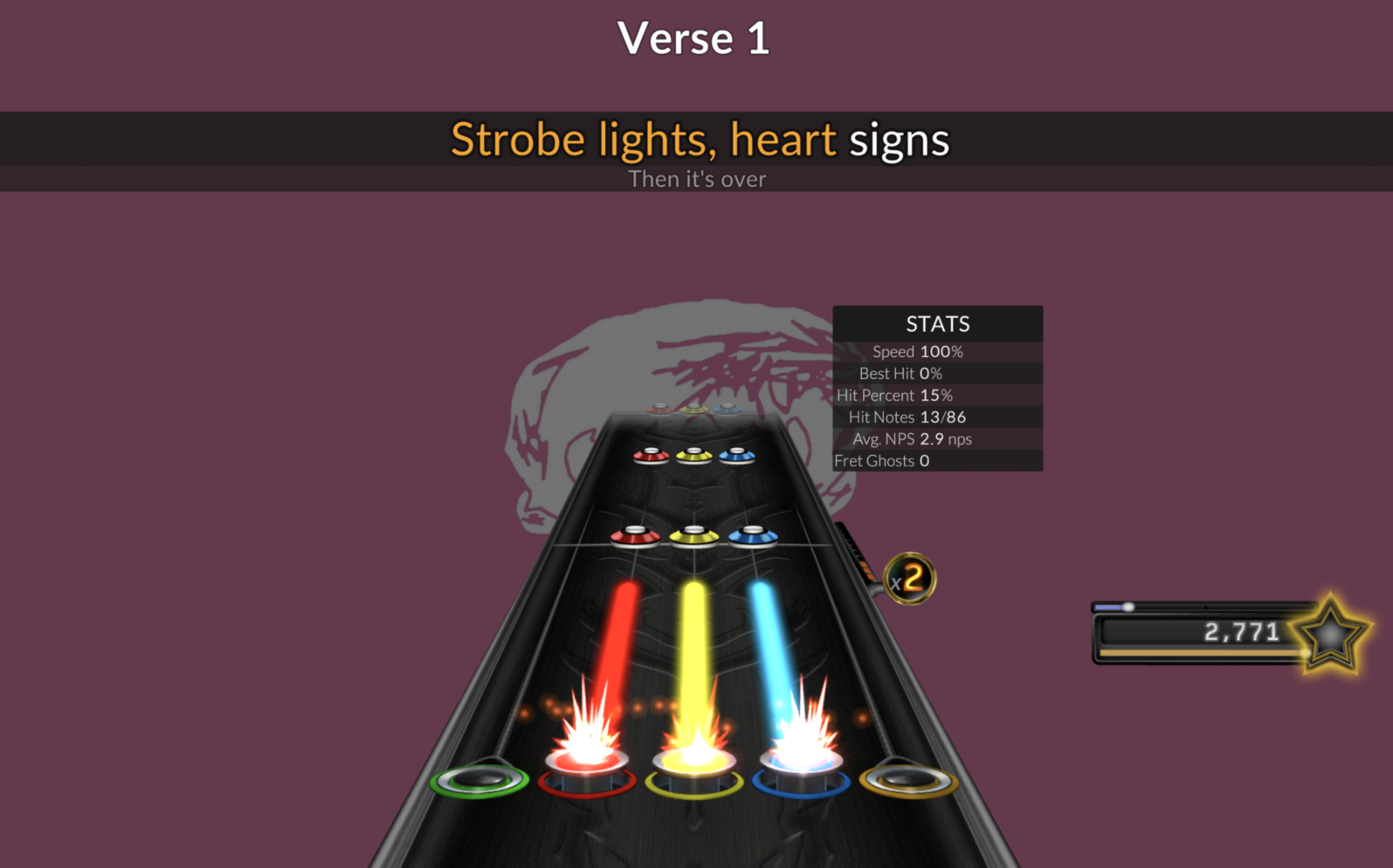
Okay, technically I’ve been playing Clone Hero on and off since 2020—only on keyboard, and mostly casually. That changed this year when I got a cheap Wii guitar off Facebook marketplace (and an adaptor from RetroCultMods to get it working). As it turns out, playing this modern-day Guitar Hero clone is a totally different experience when you’re actually holding a plastic guitar.
The pitch (bend) is pretty simple: what if Guitar Hero, but with almost any song you can think of? Clone Hero lets anyone create charts for any song. Of course, the vast majority of people won’t get into charting—I myself still haven’t, though I mean to eventually—so it’s a good thing there’s a vast online community of charters uploading their hard work for free. Depending on the artists and genres you listen to, there’s a solid chance someone has charted the specific song you’re looking for.
Clone Hero unlocked a whole new relationship to music for me. I started noticing flourishes and patterns in tracks I’ve listened to for years, but never really heard like this before. Grinding a particularly difficult segment is a satisfying and surprisingly intimate way to engage with music. Even the hunt for charts can be meaningful. You might start out looking for specific songs or artists, but you can also download curated megapacks of charts, which can be great vehicles for discovering new music. Finding a chart for a song you like, especially when it’s something more obscure, can feel like striking gold.
But maybe my favorite part is how social it is. Throwing Clone Hero up on the TV when friends are over, passing the guitar around, scrolling through the song list and talking about our music tastes—it’s all part of the experience. Even people who don’t want to play end up hanging around, watching, vibing, suggesting tracks. Clone Hero somehow manages to be both a hardcore skill game and an effortless party game, which is a rare and impressive thing.
I think of Clone Hero the same way I imagine some record collectors think of vinyl. In the music streaming era, where my relationship to music often feels dominated by convenience and access, Clone Hero’s friction is a welcome reframe: an invitation to treasure what you know and have, and perhaps to explore what you don’t.
1. ⤵︎
1. Hollow Knight: Silksong
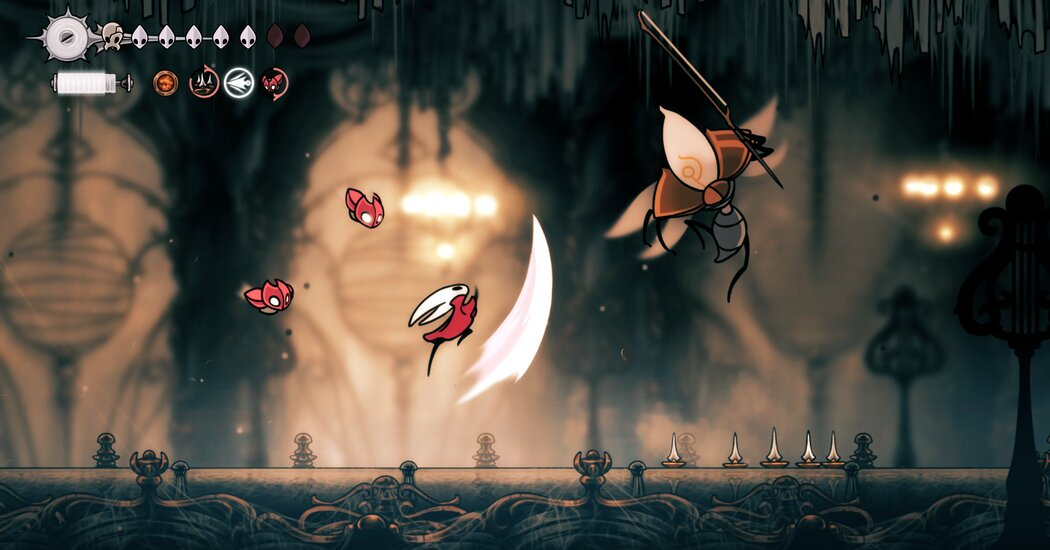 I played a lot of games that I really enjoyed this year, but in the back of my mind I would always wonder—what if Silksong finally comes out this year? What point is there in ranking anything if Silksong drops and is even half as good as we’ve been hoping?
News flash: it is.
Where do I even start with this game? Silksong takes everything that made its predecessor special and cranks it to the max. The combat system is deeper, more expressive, and more customizable, encouraging you to develop a playstyle entirely your own. All sorts of bugs populate Pharloom—pilgrims, adventurers, rivals, grifters—all of whom feel like they have entire lives of their own, even with only a few lines of dialogue. And everything from the feel of Hornet’s movement to the subtlest of background details shines with a level of polish exceeding even the game’s 7-year development cycle.
One of the marks of a beautifully designed game, I think, is when you can feel its developers talking to you. Not through literal voiceovers, of course (although that can be hilarious). I’m talking about seeing a crack in the wall or suspicious gap, asking “I wonder if…” and the game responding with a “yes”. Silksong pulls every game design lever it has to tell you about its world: discovery, dialogue, music, level design—and yes, difficulty.
I won’t deny that the game can be punishing. There are long stretches where the game refuses to soften itself for you, trusting that you’ll stick with it—pay attention, adapt, sit with the frustration, perhaps find another way around. That friction isn’t meant to test your reflexes so much as your commitment. It’s part of how the game communicates what kind of world this is, and what it expects from you in return. Fans of soulslike games will recognize this formula, but Silksong executes it with remarkable elegance.
The world is dense with secrets and stories, and the game trusts you to find meaning in them without holding your hand. At so many points, I felt seen—not in a sentimental way, but in the sense that the game clearly understands the kind of player it’s speaking to. Silksong rewards curiosity, buy-in, and a genuine interest in the world around you. After 7 years of waiting for this game, this level of confidence and trust is an absolute treat.
Was it worth the wait? Absolutely, undeniably, emphatically yes.